
Impact
Impact
Empowering communities through sericulture.
Impact
Socio-economic Impact
In Ethiopia, sericulture (silk production) was once almost unknown, and many rural communities had limited access to stable and diversified income sources. Bere Har has played a pioneering role in introducing and developing the silk sector, particularly in the Gamo area, where silk production is now becoming part of the local economy.
Through its work, Bere Har has contributed to the growth of silk initiatives across Ethiopia, attracting attention from development partners and institutions. Today, Bere Har serves as a center of excellence in sericulture, playing a key role in knowledge transfer and capacity building.
In collaboration with partners like ICIPE, which coordinates women and youth groups, sends trainees to Bere Har to gain practical skills. To date, Bere Har has provided training to more than 3,000 individuals from four regions—Amhara, Tigray, Oromia, Sidama, and SNNPR—helping to build a new generation of skilled producers and entrepreneurs in the silk value chain.
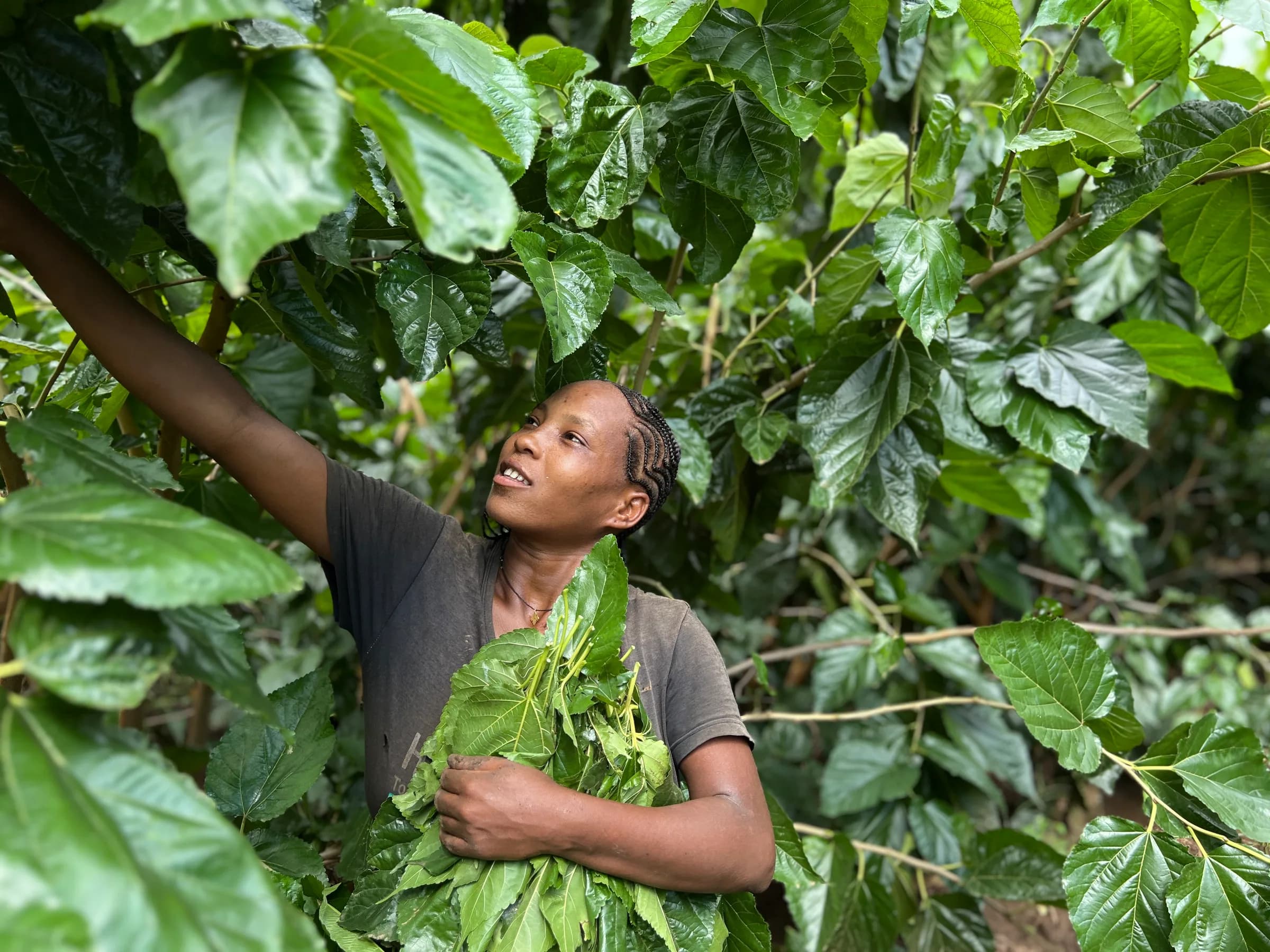
Bere Har also works closely with out-grower farmers, especially within the Gamo community, supporting them in silkworm rearing and cocoon production. This model creates consistent income opportunities while allowing families to work from their own homes and land. The impact is significant—households are able to improve their living conditions, invest in their futures, and strengthen their economic resilience.
Currently, Bere Har employs more than 60 people directly and supports many more through its out-grower network scheme, including farmers, spinners, and artisans. By creating a structured and reliable value chain, the company contributes to long-term economic stability and rural development.
Gender Impact
In many parts of Ethiopia, women face limited access to formal employment and income-generating opportunities. Bere Har is committed to addressing this gap by creating inclusive and empowering work environments.
The company works extensively with women through its out-grower system and training programs, providing them with income, technical skills, and opportunities for independence. Women are actively engaged in silkworm rearing, spinning, and textile production, enabling them to contribute meaningfully to their households and communities.
Through training, employment, and participation in the value chain, women and youth build confidence, improve decision-making capacity, and gain greater social and economic independence.
Environmental Impact
Bere Har’s production is rooted in natural and sustainable practices. Silk production is inherently environmentally friendly, and the company strengthens this by promoting local sourcing and responsible resource use.
By working with local farmers and natural fibers, Bere Har supports sustainable agricultural practices and reduces reliance on imported materials. The integration of sericulture into rural livelihoods also encourages biodiversity and efficient land use.
As a center of excellence, Bere Har continues to promote sustainable production methods while maintaining high-quality standards—ensuring that the growth of Ethiopia’s silk sector benefits both people and the environment.
Stay Connected
Join Our Community
Subscribe for exclusive access to new collections, artisan stories, and special offers. Get 15% off your first order.
By subscribing, you consent to receive Bere Har updates. You can unsubscribe at any time.